Arrhythmogenic Cardiomyopathy (ACM)
A guide for people with ACM, families, and carers in Australia and New Zealand.
Introduction
Arrhythmogenic cardiomyopathy (ACM) is a rare condition where the heart muscle is gradually replaced by fibrous and fatty tissue.
This weakens the heart and can disrupt its normal electrical activity (that tells the heart to beat), increasing the risk of arrhythmias (abnormal heart rhythms), heart failure, and in some extreme cases, sudden cardiac arrest.
This fact sheet provides information for individuals and families affected by ACM in Australia and New Zealand. It is general information only and should not replace advice from your doctor or healthcare team.

What is ACM?
Arrhythmogenic cardiomyopathy (ACM) is a type of cardiomyopathy (heart muscle disease) that causes arrythmias (irregular heartbeats). ACM usually affects the muscle in the lower right side of the heart (the right ventricle), so it is sometimes called arrhythmogenic right ventricular cardiomyopathy (ARVC) or arrhythmogenic right ventricular dysplasia (ARVD). Although in some people, the left side or both sides of the heart can also be affected (arrhythmogenic left ventricular cardiomyopathy (ALVC) or biventricular arrhythmogenic cardiomyopathy).
ACM is caused by a problem with the groups of proteins that hold the heart muscle cells together, called desmosomes. When this happens, healthy heart muscle is slowly replaced by fatty deposits and scar tissue. This makes it harder for the heart to pump blood properly, leading to abnormal heart rhythms.
How many people have ACM?
ACM is a rare heart condition, and we don’t know exactly how many people have it. It is more common in men but can occur in both men and women. It can occur in people as young as teenagers, or people older than 70, but most commonly presents in people in their 30s.
What causes ACM?
ACM is most often caused by changes (variants) in the genes that hold the instructions for the proteins that hold heart muscle cells together (desmosome proteins). These variants weaken the connections between cells, making them prone to damage and weakness, especially during physical stress, or traumatic and emotional incidents.
A person with ACM has a 50% chance of passing the faulty gene to their children (known as an autosomal dominant inheritance pattern). This is the same for both men and women passing the condition to their children. Not everyone who inherits a mutation will develop symptoms, and the severity of the condition can vary within families.
What are the symptoms of ACM?
The symptoms of ACM can vary a lot from person to person, even within the same family. ACM can be a progressive, with symptoms worsening over time in some people. Others with ACM may be asymptomatic, which means they are not experiencing any symptoms of the condition.
Symptoms may include:
- Palpitations or fluttering sensations in the chest
- Dizziness or fainting (‘syncope’), especially during or after exercise, or a traumatic or emotional event
- Chest discomfort, including pain described as dull, sharp, radiating or non-radiating
- Unexplained fatigue, tiredness, or reduced exercise tolerance
- Shortness of breath at rest and on exertion
- Swelling in the belly, legs, or ankles
- In some cases, sudden cardiac arrest may be the first sign
What are the complications of ACM?
ACM can lead to serious health problems, including:
- Heart block – slowing or stopping of the normal electrical activity that controls the heartbeat, preventing the pumping normally.
- Dangerous heart rhythms – fast or irregular heartbeats that can become life-threatening.
- Sudden cardiac arrest – in rare cases, when the heart suddenly stops beating, especially during intense exercise or after strong emotional events.
- Heart failure – reduced blood flow as the damaged heart muscle has difficulty pumping blood properly.
- Blood clots – which can be dangerous if they travel to the lungs or brain.
What are the complications of ACM?
To find out if someone has ACM, doctors use a range of tests. In people with asymptomatic ACM, it only be diagnosed through family screening or after a sudden cardiac event. Some of the tests used are:
- Physical exam and medical history: to look at symptoms and whether other family members have this condition (as it can be genetic).
- Electrocardiogram (ECG): measures heart rhythm and can show if the electrical signals controlling the rhythm are normal. An ECG can be measured in a doctor’s office, or in some cases a portable ECG will be worn for 24–48 hours (sometimes called a Holter monitor).
- Implantable loop recorder – is a small ECG device that is implanted under the skin to record the heart’s rhythm and electrical activity. Implantable loop recorders can be in place for up to a couple of years, if required.
- Echocardiogram (an ultrasound of the heart): shows if the heart is an unusual shape or size, particularly if the walls of the heart are thickened, and if it is filling up and emptying blood normally.
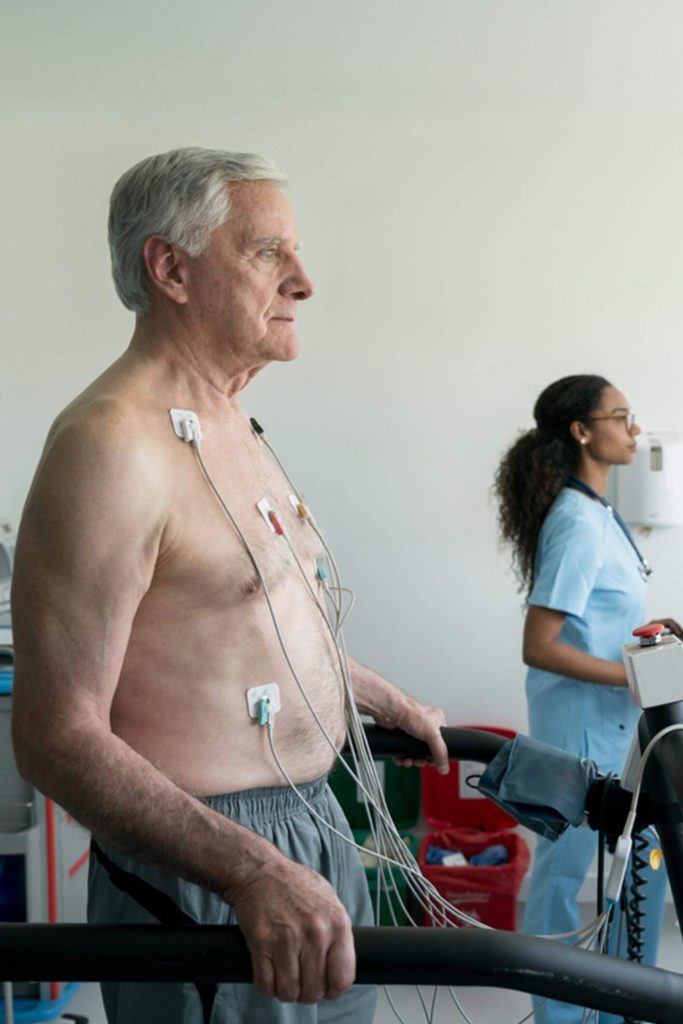
- Exercise testing: monitors how well your heart is working and its rhythm while you are doing physical activity.
- Cardiac magnetic resonance imaging (MRI): provides detailed images of the heart muscle that can show changes in shape and size, as well as how well the heart is pumping blood. It can also show areas where fatty deposit or scar tissue have accumulated.
- Genetic testing: looks for changes in the genes that can lead to ACM.
- Family screening: close relatives of people diagnosed with ACM are encouraged to receive genetic counselling and testing.
A note about genetic testing and family screening
If you have been diagnosed with ACM it is recommended that you have genetic testing and counselling. Genetic testing can see if your ACM is caused by a variant, and if it is, genetic counselling can help you understand what the diagnosis means for you and decide what is best for your healthcare. It can also help you decide how you would like to approach things like family planning, where your variant could be passed on to your future children.
If one of the variations that can cause ACM are found in your testing, then your close relatives (parents, siblings, children) should be tested too – this is called family screening. It is important to communicate this with your family, who can arrange testing through their GP.
How the genetic variants cause ACM is not fully understood. Some genetic changes may be identified in testing but their impact isn’t known (called a variant of uncertain significance or VUS). That means that not everyone that has a variant will develop ACM. But knowing about a genetic change means that you and your family members can have your hearts checked for any signs of cardiomyopathy before symptoms develop, and you can make any necessary lifestyle changes or start medicines that can help prevent the condition developing or worsening.
How is ACM treated or managed?
There is currently no cure for ACM. It is a chronic condition and is managed by treating symptoms and reducing risks. This can involve changing your lifestyle, taking medicines, or sometimes having an operation.
Treatments that aim to stop the progression of the condition include:
- Pacemakers or implantable cardioverter-defibrillator (ICD): are small devices that are implanted under your skin to monitor your heartbeat. If it changes (going to fast, slow or becoming irregular) these devices send an electrical signal that helps the heart to keep a normal heart rhythm. One may be recommended for people who have heart block from ACM, your irregular heartbeat is resistant to medicine and other treatments, or you are at high risk of complications.
- Cardioversion: involves giving electric shocks to the heart through pads placed on your chest. It is done in a hospital or health clinic under anaesthetic. It is used to treat irregular heartbeats and can help put the heart back into a normal rhythm.
- Catheter ablation: uses a small tube (catheter) to impair the abnormal tissue in the heart that is causing irregular heartbeats. It is done by a specialist cardiologist in hospital. This is sometimes done alongside an ICD, as the irregular heartbeats can come back.
Treatments that ease symptoms and conditions caused by ACM include:
- Angiotensin-converting enzyme (ACE) inhibitors and angiotensin II receptor blockers (ARB): reduce blood pressure and make it easier for the heart to work. ARBs are often used if someone can’t have ACE inhibitors.
- Anticoagulants (also known as blood thinners) – lower the risk of stroke in people with an irregular heartbeat.
- Beta-blockers and anti-arrhythmic medicine: used to correct abnormal heart rhythms.
- Diuretics: (also known as water/fluid tablets) – help the body get rid of extra fluid, which can ease swelling and breathlessness. These are widely used and available in both Australia and New Zealand.
Lifestyle changes that can help maintain general health and manage symptoms:
- Staying active: Speak to your doctor about the right amount of exercise for you. Physical activity is good for your heart and general health, however the amount of exercise that is appropriate will be different for every person, and this is particularly the case in people with ACM. It is important to discuss this with your doctor. Starting a new exercise program is not advised before speaking with your doctor
- Eating a heart-healthy diet and maintaining a healthy weight: a balanced diet can help to keep a healthy weight, which will reduce the impact on the heart as well as helping with general health.
- Limiting alcohol: alcohol can raise your heart rate and increase blood pressure. Limiting alcohol intake is good for your heart.
- Regulating caffeine intake: caffeine can raise your heart rate and increase blood pressure. The amount of caffeine that is safe to have will be different for each person; your doctor can advise how much is safe for you.
- Quitting smoking: stopping smoking is important for overall health as well as heart and lung health.
- Managing stress: learning techniques to relax such as breathing exercises and mindfulness can help you manage your condition.
- Keeping a diary: monitoring your weight, fluid intake, and ability to exercise can help to highlight any changes in your heart health early. Keeping a diary that records this (and any other symptoms you experience) is very helpful for your doctor.
A note about exercise
A direct link has been found between vigorous sports and activity and progression of ACM. This includes an increased incidence of dangerous arrhythmias and heart failure. Therefore, strenuous and competitive sports, and endurance or vigorous exercise are not recommended for people with ACM.
It is critical that you ask your doctor how much, or how strenuously, you should be exercising. Gentle sports such as walking, golf, yoga, and other strength training may be some ways for people with ACM to stay in shape and have fun without increasing their risk.
Where to get support
Support is available for people affected by ACM in both Australia and New Zealand. Your GP and cardiologist are the main contacts for discussing symptoms, treatment options, and ongoing care.
You can also get information and connect with others by visiting Cardiomyopathy Australia New Zealand, joining our private Facebook group, and following our social media channels.

Additional supports:
Australia:
- Visit the Australian Heart Foundation
- For young people visit HeartKids
New Zealand:
- Ask you cardiologist about a Heart Failure Nurse Specialist in your area
- Visit the Cardiac Inherited Diseases Group (CIDG)
- Visit the New Zealand Heart Foundation
- For young people visit HeartKids: